Sri Lankan Tamil Wedding Traditions Explained
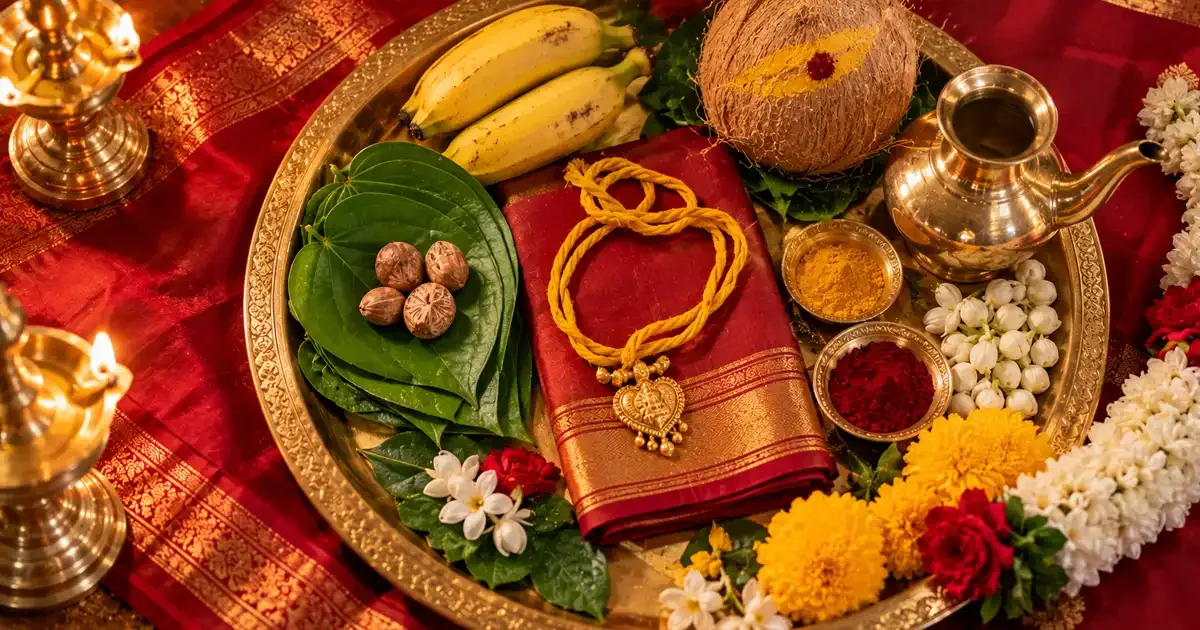
A young man in London is about to marry a girl from Jaffna. Her family has sent a list of the ceremonies they plan, and he reads it on the train with growing confusion: ponnurukku, nichayathartham, koorai, muhurtham. His own parents have half-forgotten the details since they left Sri Lanka. A Sri Lankan Tamil marriage carries a sequence of customs that families recognise instantly, even when nobody can quite explain them.
This guide walks through that sequence in order, from the first proposal to the days after the wedding, with notes on how families in the diaspora adapt it. Practice differs between Hindu and Christian families, between Jaffna, Batticaloa and the hill country, and from one household to the next. Treat what follows as a common pattern, not a rulebook. For a broader look at Tamil weddings, see our earlier post on Tamil wedding traditions for modern families.
From proposal to wedding: the Sri Lankan Tamil marriage sequence
Here is the usual order of events in a Hindu family. Christian families share many of the early steps and replace the temple rites with a church service.
| Step | What happens | Typical timing |
|---|---|---|
| Proposal | A relative, broker or online profile brings the two families together. | Weeks to months |
| Porutham | Horoscopes are compared, often by the family astrologer. | A few days |
| Pen paarthal | The groom's family visits the bride's home to meet her. | After a good porutham |
| Nichayathartham | Engagement: the families formally agree and exchange gifts. | Weeks or months before |
| Ponnurukku | Gold is melted to make the thaali, at an auspicious time. | Days or weeks before |
| Wedding day | Rituals at home, then the muhurtham at the kovil or hall. | The chosen date |
| After the wedding | Visits between the two homes and to temples. | The days that follow |
Families from the north, such as those described on our Jaffna Tamil matrimony page, often keep the full sequence. Others combine or shorten steps, especially when relatives live abroad.
Matching horoscopes and choosing the muhurtham
In many Sri Lankan Tamil homes nothing moves until the horoscopes have been compared. The astrologer looks at the ten poruthams, with special attention to rajju and vedhai, and often at chevvai dosham as well. If the match is good, the same astrologer usually chooses the muhurtham, the auspicious time for the thaali to be tied.
Families also think about the calendar. The month of Aadi is widely avoided for weddings, and many prefer Thai, Aavani or Vaikasi. If you want a first answer before involving the astrologer, the free porutham tool compares two stars in about a minute and shows any dosham. Our guide to the 10 poruthams explains what each one means.
Engagement and the family exchange
Pen paarthal, the visit to see the bride, is usually a quiet family affair: tea, sweets, a little conversation, and an unspoken sense of whether things feel right. If both families agree, the nichayathartham follows. Elders from both sides exchange betel leaves, fruit and gifts on a tray, and the date of the wedding is often announced.
In many Jaffna families, the groom's side presents the koorai saree at or before the wedding. This is the saree the bride changes into for the most important part of the ceremony, and its colour and quality are chosen with care.
A few weeks before the wedding, some families hold ponnurukku: a goldsmith melts gold at an auspicious time, in front of relatives, to make the thaali. It is a small, joyful gathering and one of the customs most associated with the north.
The wedding day: kovil and home ceremonies
A Hindu wedding day usually begins at home. The bride and groom are each prepared in their own houses with prayers and blessings from elders. Many families invite a priest to perform a short puja before leaving for the kovil or the wedding hall.
At the ceremony itself, the main moments are familiar across most Sri Lankan Tamil Hindu weddings:
- The arrival. The groom is welcomed, sometimes with his feet washed by the bride's brother as a sign of respect.
- The rituals before the fire. The priest chants, offerings are made, and the couple sit before the sacred fire.
- The koorai. The bride changes into the koorai saree from the groom's family.
- The thaali. At the muhurtham, the groom ties the thaali while drums and nadaswaram play and elders shower rice and flowers.
- The blessings. The couple walk around the fire and receive blessings from elders.
Christian and Catholic families hold the main ceremony in church, with vows and a blessing from the priest or pastor. Many keep Tamil customs alongside, such as a blessed thaali, the koorai saree and Tamil hymns.
The days after the wedding
The celebrations do not end with the ceremony. In many families the bride is welcomed into the groom's home with a lamp, and in the days that follow the couple visit both families, receiving food, gifts and blessings from relatives who could not attend. Some families also visit their family temple together soon after the wedding to give thanks.
These visits matter more than they seem. They are how the bride or groom gets to know the new family's elders, and how the two households begin to feel like one. In the diaspora, where relatives are spread across continents, the visits often become video calls and a round of dinners over the following weeks.
Christian weddings in the same sequence
Christian and Catholic families follow much of the same early path: the proposal, the family visit and the engagement. Horoscopes are usually left out. Instead, the couple meet the priest or pastor, attend any preparation the church asks for, and, in Catholic parishes, have their banns announced. The wedding takes place in church with vows and a blessing, and the reception follows in a hall or at home. Many families still keep the koorai saree and a blessed thaali, which shows how deeply these customs belong to Tamil culture as well as to faith.
Thaali, its meaning and its variations
The thaali is the most important symbol of a Tamil marriage. For many families it carries religious meaning and a sense of protection for the couple. Its shape differs from community to community and family to family, and many families have a design they have used for generations.
In Sri Lanka, the thaali is often worn on a heavy gold chain known as the thaalikkodi. Some brides later move it to a lighter chain for daily wear. In Christian weddings, the thaali is usually blessed during the service and may carry a cross. Whatever the design, it is treated with great respect, and asking the other family about their tradition is a thoughtful way to begin planning.
How diaspora families adapt the traditions
Weddings in Toronto, London, Zurich or Sydney rarely follow the full sequence. Families adapt for practical reasons, and most elders accept the changes:
- Weekend timing. The muhurtham is chosen from Saturday or Sunday dates so guests can attend.
- Combined events. Engagement and ponnurukku may happen on the same day, or the engagement is held by video call with elders in Sri Lanka.
- Two celebrations. Some couples tie the thaali at a family temple in Sri Lanka and hold a reception abroad.
- Elders joining online. Grandparents who cannot travel watch a live stream and give their blessings by phone.
- Shorter ceremonies. Halls are booked by the hour, so rituals are often condensed.
The heart of a Sri Lankan Tamil marriage stays the same: two families agreeing, elders blessing the couple, and the thaali tied at the chosen moment. If your family is starting that path, you can register free and search for families who share your traditions.
Free to join
Find your Tamil life partner
Create a free profile in a few minutes, and decide for yourself who sees your photos and contact details.
Register FreeOn this page
- From proposal to wedding: the Sri Lankan Tamil marriage sequence
- Matching horoscopes and choosing the muhurtham
- Engagement and the family exchange
- The wedding day: kovil and home ceremonies
- The days after the wedding
- Christian weddings in the same sequence
- Thaali, its meaning and its variations
- How diaspora families adapt the traditions
Free to join
Find your Tamil life partner
Create a free profile in a few minutes, and decide for yourself who sees your photos and contact details.
Register Free