Tamil Second Marriage: A Respectful Guide for Families
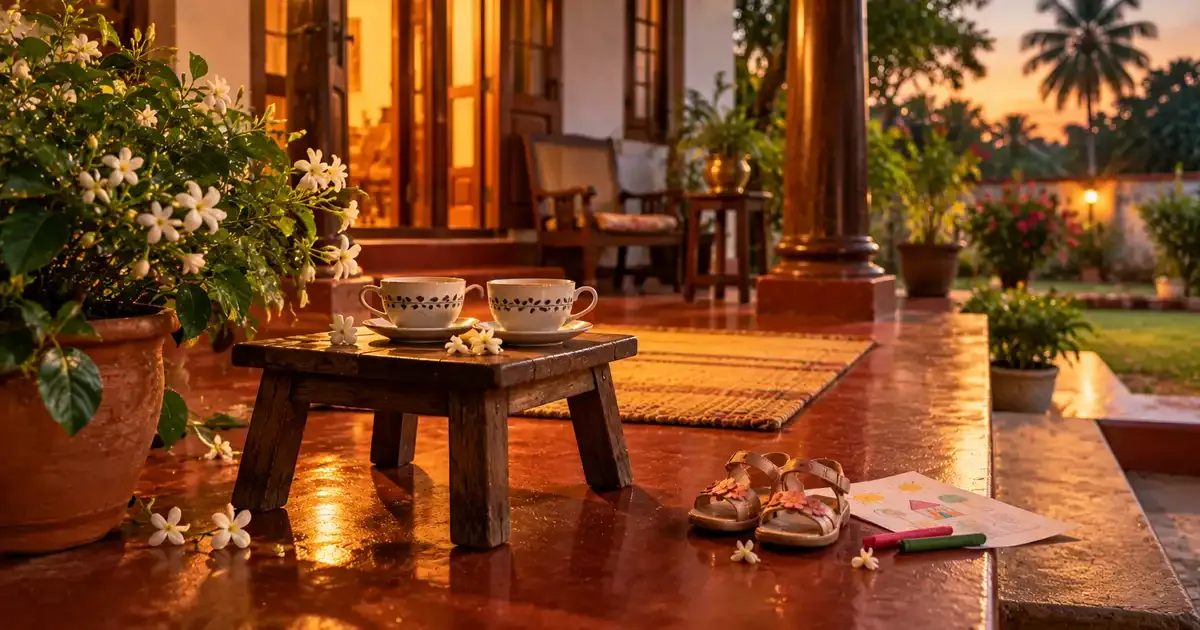
Two years after the divorce, your daughter is settled again. She has her job, her routine and her friends. Then, at a cousin's wedding, an aunt asks quietly whether "anything is being looked at" for her. On the drive home nobody mentions it, but everybody is thinking about it. Many second marriage Tamil families start exactly here: with a question that feels too delicate to say out loud.
This guide is for the person thinking about marrying again and for the parents, brothers, sisters and grown-up children who want to help without getting it wrong. It covers the family conversation, writing a profile, horoscopes and privacy, one step at a time.
Second marriage in Tamil families today
Attitudes have changed a great deal within one generation. Divorce is more common than it was, people marry later, and families abroad have often seen remarriage among friends and colleagues. Many elders who once thought of remarriage as something to keep quiet now simply want their son or daughter to be happy.
That change is not the same everywhere. Widows in particular have faced stricter customs and more gossip in some communities, and some of that remains. A family in a small town may feel the pressure of what neighbours say more than a family in Toronto does. Neither feeling is silly. It just means each family has to decide for itself how open it wants to be, and when.
The people looking for a second partner are also more varied than people assume. They include a widower of forty with two teenagers, a woman of twenty-eight whose marriage lasted a year, and someone who is separated and waiting for the divorce to be finalised. Each situation calls for a slightly different conversation.
Talking with parents, children and relatives
A second marriage involves more people than a first one, and they often have different feelings about it. These steps help many families keep the conversation calm:
- Start with the person who is remarrying. Parents sometimes begin the search before their son or daughter is ready. Ask first, and accept "not yet" as an answer.
- Agree what you are looking for. Age range, whether the partner may have children, where you would live, and whether horoscopes matter. Writing this down avoids arguments later.
- Talk to children in a way that fits their age. Young children need reassurance that nothing changes for them yet. Teenagers often want to be asked, not told. Adult children may want to meet the other family early.
- Choose one or two family members to help. A brother or sister who manages messages can protect the person from tiring conversations, but too many helpers confuse the other family.
- Decide what to tell the wider family, and when. Some families share the news only once there is a serious proposal. That is a reasonable choice, not a secret.
If there was a difficult divorce, expect some relatives to have strong opinions. Listen, thank them, and keep the decision with the people it belongs to.
When the other family asks about the past
Sooner or later, the other side will want to understand what happened before. Most second marriage Tamil families find it easier to agree in advance who will answer and how much will be said. A calm, short account given once, parent to parent or person to person, is usually better than long explanations repeated to every relative.
It is fair to ask the same questions in return. If the other person has been married before, you may want to know about children, the divorce and how both families feel now. Asking politely is not suspicion. It is how two families build trust.
Writing an honest, dignified profile
The profile is where most people worry about saying too much or too little. A good rule is to be clear about facts and brief about history. Families will ask about the past in time; the profile only needs to answer the first questions.
Before you publish, check that your profile does these things:
- States your marital status correctly: divorced, widowed or separated.
- Says whether you have children, their ages, and whether they live with you.
- Says whether you would welcome a partner who also has children.
- Describes your life now, your work, your family and your interests, rather than what went wrong before.
- Says what kind of partner and family you hope for, in a sentence or two.
- Leaves out names, blame and legal details. These belong in private conversations, if anywhere.
- Uses a recent photo, with visibility set the way you are comfortable with.
Short, calm sentences work best. "Widowed in 2022. My son is nine and lives with me" says what is needed with dignity. Our guide on how to write a great matrimony profile has more help with the rest of the profile.
Horoscope questions second marriage Tamil couples ask
Families who used horoscopes the first time often wonder whether to use them again. There is no single answer. Some families check porutham exactly as before. Some give it less weight the second time, especially when both people are older and know their own minds. Some Christian Tamil families never used horoscopes at all.
If you do check, the ten poruthams work the same way for a second marriage as for a first. Our free porutham tool compares the two stars and rasis and warns you about rajju and vedhai, the two doshams families take most seriously. It does not ask about marital status, and the result does not change because either person has been married before.
Remember that the stars depend on accurate birth details. If an old horoscope has been lost or was written in a hurry, it is worth having it checked before relying on it. When a result worries the family, a full reading by an astrologer you trust is the usual next step.
Privacy: who sees your profile and photos
Privacy is often the biggest worry, and with good reason. Nobody wants a former in-law, a colleague or a neighbour to find their profile by accident. On DailyMatrimony you decide who sees what:
- Photos can be shown to all signed-in members, only to families you have exchanged interests with, or only to members whose request you approve.
- Blurred photos let others see that a photo exists without seeing your face.
- Contact details can be limited, so your phone number is not shown to everyone.
- Hiding your profile removes it from search results for a while, without deleting it.
- Report and block are available from your inbox if anyone behaves badly.
You can also search by marital status, so you can look for people who have been married before, or include everyone. Start with the strictest settings you are comfortable with. You can always open up later, once you trust a family.
Taking the first step
If you are separated, make sure the divorce is legally complete before you agree to marry again. Wherever you live, an unfinished divorce can delay or even prevent a new marriage, and families will ask.
Meeting safely matters as much the second time as the first. Have a video call before any meeting, meet first with family or in a public place, and never send money to someone you know only online, whatever the reason given. Many second marriage Tamil weddings are small and private, and the search can be just as quiet.
When you feel ready, there is no need to announce anything. You can create a free profile quietly, set your privacy first, and look around before you send a single interest. Our page for Tamil second marriage profiles explains how the site works for people marrying again. Take it at your own pace. A second marriage deserves the same care, hope and respect as the first.
Free to join
Find your Tamil life partner
Create a free profile in a few minutes, and decide for yourself who sees your photos and contact details.
Register FreeOn this page
Free to join
Find your Tamil life partner
Create a free profile in a few minutes, and decide for yourself who sees your photos and contact details.
Register FreeRelated Articles
All articles
How to Write a Great Matrimony Profile
What families read first, how to write the "about me" section, photos and privacy, common mistakes and a checklist before you publish.

Why Verified Profiles Are Safer Than WhatsApp Matrimony Groups
WhatsApp matrimony groups are fast and familiar. Here is how to protect your photos and number, spot fake proposals, and search more safely.
Best Sri Lankan Tamil Matrimony Sites (Honest Comparison)
How to compare Tamil matrimony websites, newspaper columns, brokers and groups fairly, with a checklist and our own limits stated plainly.